“Emily, never lose your love of words,” was my Head of Sixth Form’s parting gift to me as I left school, thirty years ago. I was known at school as the one who would relish the challenge of a difficult reading or recitation, as long as there was rhythm and musicality to the language. They would say, “Emily will perform it.” And I would. And I enjoyed it. I was also the only one to study Ancient Greek. Etymology has always fascinated me.
I went back for a school reunion, last summer, and spoke with another of my English teachers who said she still talks about the moment the penny dropped for me. She said it was one of those very rewarding moments of teaching. I was intrigued to hear what she had to say and explained how much that penny dropping moment had impacted my life. That’s when her tears flowed. Being able to thank her was very precious. She taught me so much. I struggle to believe that it was ten years ago, however, that I was wrestling with redrafting Elin’s Air and my publishers and editors were being very patient. I credit her. I thought then that so much more writing would flow on from that moment but the only publications since have been magazine articles. The seasons of writing have been more intermittent than I expected.
Instead, I get to pass that love of musicality, rhythm and words on, in an obscure way. This past week, on a few occasions, I found myself discussing with pupils the importance of using our words wisely. One was complaining about what another had said about him. He didn’t like how it made him feel. I asked the complainant how his words to a different pupil had perhaps made her feel as she walked into the room. He responded well. Genuine apologies were made and we discussed what saying ‘sorry’ does to us.
It was in that same setting that I had another pupil say she doesn’t understand me because she has never heard me raise my voice. I asked the others in the room to raise their hands if they had heard me raise my voice. Every hand went up. She happened to have been absent on the day I shouted. But, I do think carefully about how I use words and which words I use. My Ancient History teacher once told me she could tell I put a lot of thought into what I wrote. I now think it read as painfully laboured writing.
Is it how we say it that matters or what we say? Or is it a bit of both? I also discussed this with a lively-minded pupil, this week.
Writing carries its own tone. Just as I can speak, I can carelessly write, oblivious to the impact it has. I’m sorry if you have ever been a recipient of those blunt and thoughtless messages I have sent. However, the more we practise good use of words, the easier it becomes. And there is always a get-back-on-your-bicycle element that gathers momentum when we have fallen off. I believe my pupils understood this.
Last week, I sat in on an author’s webinar and held my breathe and stretched my patience between each sentence. She talked slowly. However, she had good advice and I liked what she said, so I thought I should read her book. We have a few days away. I purchased her novel and began.
Now! How shall I say this?
Well, let’s be blunt. I have no desire to emulate her writing style. At the end of Chapter 1, I lost patience, put the book aside and picked up another on a similar theme – an historical novel set in the same region and time – where I revelled in the beauty of effortless wordsmithing and clever story-telling instead. It is a rare thing, these days, to have time to read a book in a day and this was the second time of reading this novel. The first read shocked me with wonder at how the author made me care so quickly and deeply for the protagonists. I was swept into the intensity of the story. In this second read, I soaked in it and analysed the skill.
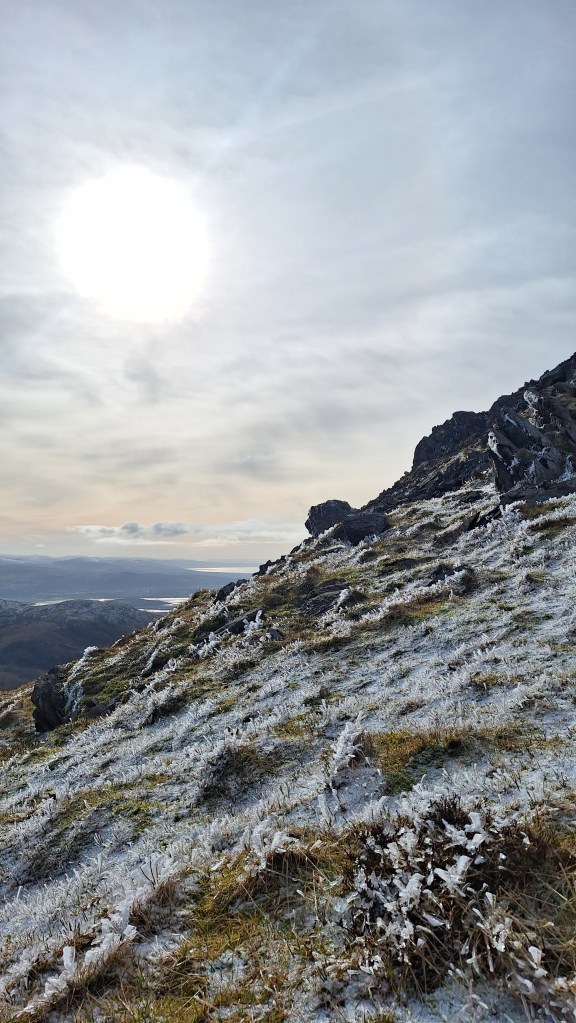
Today, I climbed a mountain with my long-suffering husband, who plans our mountain climbs very considerately. I noticed how meticulous the planning and preparation is alongside a light-hearted willingness to adjust and adapt as we go, should we need to. I have learned to trust his judgement because – to date – he has never got it wrong and we have always had amazing experiences. That underlying sense of flexibility was necessary because I wasn’t too sure I was fit enough for his plans. I didn’t want to know too much detail about the route. Knowing which mountain and which ridge first was enough. The rest of me felt settled just keeping my head down and concentrating on each step in front of me. One step leads to another, and another, which then lead to the comment that I seemed to have found my 4×4 drive – an ability to keep going steadily at a strong pace. He always comments on the ‘gears’ I have when we walk. He reckons I only have two – either too fast or too slow. But today was different. My pulling a pony through mud, morning and evening, this winter has left me fitter than we thought and I was stronger than we imagined. The scrambling was a delight and we made it before the mist on top got too thick to see snow capped ridges and the peaks of three other mountains we have walked together previously. “It’s always worth it!” he said. I concur.
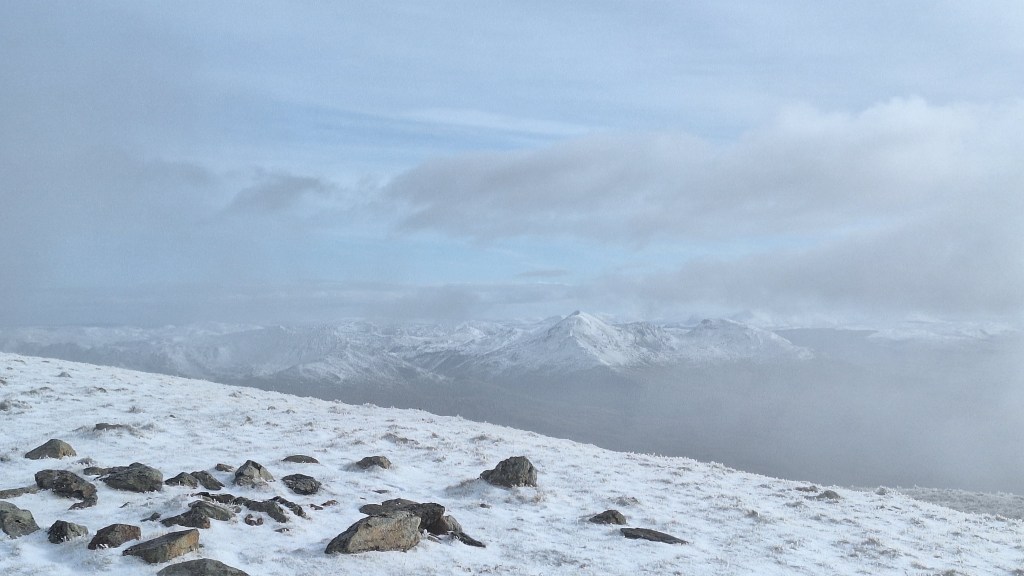
This author’s webinar was about meticulous planning and structure. It was good. I am going to try and apply it to my current W.I.P. But it occured to me, much intuition goes into our creations. When I think back to the steady one-foot-in-front-of-the-other process that birthed Elin’s Air (too long) ten year’s ago it was driven by instinct – the choice of which path to take. It was new territory. Which ridge and which peak I would climb was incidental and there was constant flexibilty. The beauty of the view from each breath-taking pause along the way fuelled my love of words and spurred me on. Reaching the top would be worth it. The experience was unique to me as was the expression and story. I chose my words with care. I hadn’t planned much.
This latest W.I.P has been meticulously researched, well-planned, carefully examined and adapted and frustrated and stalled and cast aside and reimagined. I am looking for that intuition again, the beauty of path-choice, that says “This is me. I will walk in my own way and say what I want to say, carefully.” I don’t want to copy another’s style but I will learn from their footsteps.
Give me patience! It will be worth it. Words have their own way and wisdom. Let me walk with them and use them wisely.
 emily_stanford